
The most expensive part of owning a high-performance BMW or Audi isn't the initial investment; it's the cost of a general mechanic learning how to fix it on your dime. When you choose a standard shop, you aren't just paying for a repair. You're paying for the trial and error that comes from lacking the proprietary diagnostic software and specialized tools these vehicles demand. Securing professional european auto service is no longer a luxury for Austin drivers. It's a technical necessity for anyone who values the precision engineering under their hood.
You likely feel the frustration of dealership service departments that treat you like a number while charging premium rates. It's exhausting to deal with vague estimates and the constant worry that a shop might use subpar parts just to save a few dollars. We understand that your vehicle is a high-value asset that requires meticulous attention and absolute transparency. This guide will show you how to access dealership-level expertise and transparent pricing right here in Central Texas. We'll explore how the Motor Vehicle Modernization Act of 2026 protects your right to choose independent care and explain why specialized maintenance is the only way to ensure long-term reliability for your vehicle.
Key Takeaways
- Understand why brand-specific training and specialized tools are mandatory for maintaining the precision engineering of modern Audi and BMW models.
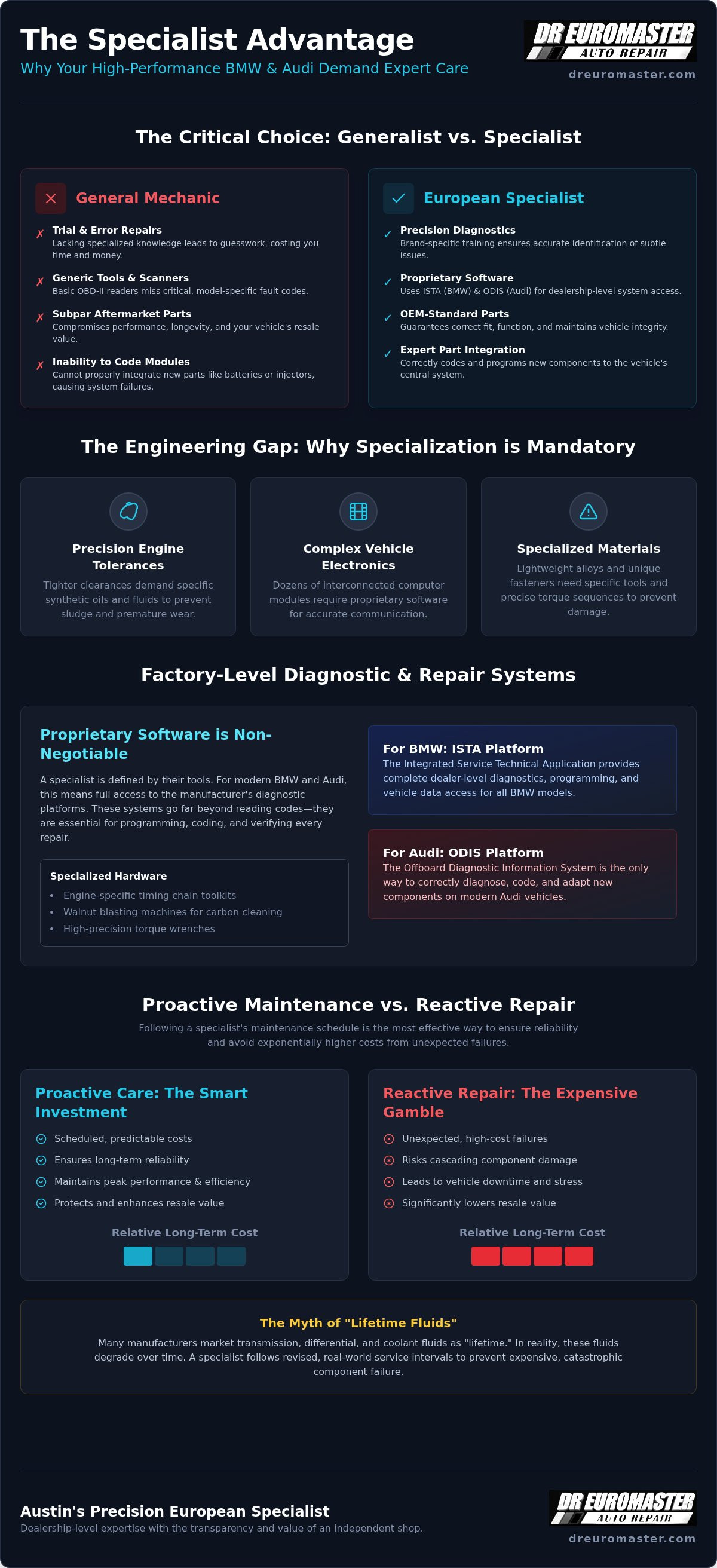
- Learn how professional european auto service utilizes proprietary software like ISTA and ODIS to handle complex coding and programming that general shops cannot perform.
- Uncover the truth about "lifetime fluids" and why following specialized maintenance intervals is the most effective way to avoid expensive reactive repairs.
- Identify the essential technician certifications and diagnostic equipment you should verify to ensure your vehicle receives dealership-quality care.
- Discover how Austin drivers can access high-end mechanical expertise and transparent pricing without the bureaucracy of a corporate dealership.
What is European Auto Service and Why Does It Matter?
European auto service isn't a generic term for fixing cars from overseas. It's a specialized engineering discipline. This type of care focuses on the unique performance requirements and tight tolerances defined by the German automobile industry. When you own a BMW or an Audi, you're driving a machine designed for high-speed stability and mechanical efficiency. These vehicles require technicians who have undergone brand-specific training. Without this niche expertise, a mechanic might miss the subtle signs of wear that lead to catastrophic engine failure.
Precision requires the right ingredients. Using generic fluids or aftermarket parts can compromise your vehicle's longevity. Specialized european auto service ensures that every component meets Original Equipment Manufacturer (OEM) standards. This commitment to quality does more than maintain performance. It protects your car's resale value. In a market like Austin, buyers look for documented specialist care before they invest in a pre-owned luxury vehicle. High-end maintenance is an investment in your asset's future.
European vs. Domestic Engineering
The gap between European and domestic vehicles starts at the assembly line. European engines often operate with much tighter clearances. This means they require specific synthetic oils with precise additive packages to prevent sludge buildup. The materials are different, too. Manufacturers use lightweight aluminum and magnesium alloys that demand specific torque sequences and specialized fasteners. You can't approach these repairs with a standard toolkit. Precision is the baseline.
Electronic complexity is another major differentiator. While a standard OBD-II scanner can read basic emissions codes, it can't access the deep system architecture of a modern Audi or BMW. Specialized care involves proprietary software that communicates with every module in the car. It's the difference between guessing and knowing. If a technician can't see the full data stream, they can't provide a verified repair.
The Value of an Independent Specialist
Choosing an independent shop offers a level of personalized attention you won't find at high-volume dealership service centers. You aren't just another VIN in a database. You're a local neighbor. Independent specialists provide a transparent environment where you can discuss complex repairs directly with the expert working on your car. This builds a long-term relationship based on trust rather than corporate quotas. It's a partnership in vehicle health.
Cost is a significant factor. Independent shops offer dealership-quality results without the massive overhead markups. You get the same OEM parts and diagnostic accuracy at a price that respects your budget. It's about maintaining your vehicle's integrity through disciplined, detail-oriented care. You deserve a professional solution that prioritizes your safety and your car's performance.
The Engineering Gap: Why Specialized Tools are Mandatory
A standard wrench set and a basic code reader aren't enough to maintain a modern European vehicle. The engineering gap between a domestic sedan and a precision-tuned Audi or BMW is massive. This disparity is why professional european auto service relies on proprietary diagnostic platforms. For BMW owners, this means utilizing ISTA; for Audi drivers, it requires ODIS. These aren't just fancy scanners. They are the only tools capable of communicating with every onboard computer module to provide verified results.
Many owners don't realize that even basic part replacements now require software integration. If you swap a battery or a fuel injector without "coding" it to the vehicle's central system, the car may not recognize the new component. This can lead to poor performance or immediate system failure. It's a level of digital complexity that requires adherence to rigorous technician certification standards. Without these specialized digital tools, a mechanic is essentially working blind on your high-value asset.
The need for specialization extends to physical hardware. High-precision engines often require unique timing chain kits that are specific to a single engine code. We also utilize specialized equipment like walnut blasting machines to safely remove carbon buildup from intake valves, a common requirement for direct-injection engines. Using general-purpose tools on these sensitive components risks stripping specialized fasteners or causing internal damage. If you suspect your vehicle isn't performing at its peak, a professional diagnostic consultation can provide the clarity you need.
Beyond the Check Engine Light
Generic scanners only provide a surface-level glimpse of vehicle health. They often return "P-codes" that are too vague for accurate troubleshooting. Manufacturer-specific fault codes provide granular detail, identifying the exact sensor or circuit at fault. This allows for live data monitoring, where we watch fuel trims and boost pressures in real-time. It also enables critical software updates for vehicle modules, which can solve performance glitches that mechanical repairs alone cannot fix.
Fluid Dynamics and Specialized Components
European engines operate at higher temperatures and pressures than their domestic counterparts. This makes high-performance oils like Liqui Moly essential for engine health. These lubricants are formulated to protect specialized alloys and maintain viscosity under extreme stress. Maintaining these standards is the hallmark of quality european auto service. The cooling systems are equally sensitive, often featuring plastic components that become brittle over time. Even your brake service requires a specific touch. European pads and rotors are designed for a particular "bite" and heat dissipation rate, requiring precise handling to ensure silent, powerful stopping performance.
Preventive Maintenance vs. Reactive Repair
The term "lifetime fluid" is one of the most dangerous myths in the automotive world. For many manufacturers, "lifetime" simply means the duration of the initial warranty period. In reality, fluids break down. Gears wear. Seals harden. If you want your vehicle to reach the 150,000-mile mark with its performance intact, you must look beyond the basic manual. Professional european auto service prioritizes verified maintenance schedules over marketing-driven promises. This proactive approach is the only way to avoid the astronomical costs of reactive repairs.
Consider the cooling system. In Austin, our relentless summer heat accelerates the degradation of the plastic and rubber components found in BMW and Audi engines. A proactive water pump and thermostat service is a controlled, predictable expense. If you wait for the component to fail, you risk a total engine overheat. The resulting damage to cylinder heads or gaskets can cost five to ten times more than the initial maintenance. Our commitment to transparency means we'll always show you the physical evidence of wear before recommending a service. This level of care requires access to specialized tools and information that ensures every adjustment meets factory specifications.
Essential Maintenance Intervals
While some manuals suggest 10,000-mile oil changes, we've found that 5,000 miles is the sweet spot for high-performance engines. Frequent changes prevent the carbon buildup that plagues direct-injection systems. Brake fluid flushes are equally critical. Brake fluid is hygroscopic, meaning it absorbs moisture from the air. Over time, this moisture causes internal corrosion in your calipers and ABS modules. Finally, don't ignore your transmission. Even "sealed for life" units benefit from fresh fluid and filters around the 60,000-mile mark to ensure smooth shifting and longevity.
The Consequences of Neglect
Neglecting small issues leads to cascading failures. A simple oil leak from a valve cover gasket can drip onto sensitive sensors or your alternator, causing complex electronic faults that are difficult to trace. This is where the "Save Now, Pay Later" trap becomes apparent. Choosing a non-specialized shop might save a few dollars today, but using the wrong coolant or an incorrect oil grade can lead to chemical reactions that damage your radiator or turbochargers. Specialized european auto service protects you from these avoidable disasters by using only OEM-approved materials and disciplined diagnostic processes. We focus on long-term reliability because we value your safety and your investment.
Evaluating an Independent European Repair Shop in Austin
Finding a reliable partner for your vehicle shouldn't feel like a gamble. When you evaluate a shop for european auto service, you must look beyond the lobby's appearance. Start with the technicians. Verified certifications from organizations like ASE are the baseline. However, for Audi and BMW owners, manufacturer-specific training is the gold standard. This ensures the person under your hood understands the nuances of your specific engine architecture. Niche knowledge is the only way to guarantee a verified repair.
Equipment is equally critical. A shop that claims to be a specialist but lacks factory-level diagnostic tools cannot provide accurate results. Beyond the tools, analyze the warranty policy. A reputable specialist stands behind their work with a comprehensive warranty. For instance, a 3-year/36,000-mile warranty on both parts and labor provides the security you need for high-value repairs. Finally, perform a transparency test. A professional technician should be able to explain the "why" behind a repair clearly. If they only provide a quote without context, they aren't treating you as a partner in your car's longevity.
Questions to Ask Your Mechanic
- "Do you use OEM or high-quality aftermarket parts?"
- "Can you provide a digital vehicle inspection (DVI) with photos?"
- "What specific diagnostic software do you use for my brand?"
A DVI is a powerful tool for transparency. It allows you to see exactly what the technician sees, removing the guesswork from the consultation. You should also ask about the specific diagnostic software they use. If they don't mention ISTA for BMW or ODIS for Audi, they may be using generic tools that miss critical data points. Adhering to these standards is essential for maintaining the precision your vehicle requires.
The Local Austin Advantage
Choosing a local expert offers distinct benefits for drivers in Austin, Cedar Park, Georgetown, and Round Rock. Local specialists understand the unique stressors of Central Texas driving. Whether it's the stop-and-go strain of I-35 traffic or the intense Hill Country heat, your car faces specific challenges. A community-focused shop relies on its reputation for honesty and meticulous work. We prioritize long-term relationships over quick transactions. If you're looking for a higher standard of care, schedule your professional consultation today and experience the difference of specialized expertise.
DR Euromaster: Austin’s Precision European Specialist
At DR Euromaster, we believe that high-performance engineering deserves equally high-performance care. We've built our reputation on providing the same level of diagnostic accuracy you expect from a dealership without the corporate bureaucracy or inflated overhead. Our facility is a specialized hub for Austin drivers who value precision. We focus our expertise exclusively on BMW and Audi models because we know that true mastery requires a narrow focus. When you choose our european auto service, you're choosing a team that understands every nuance of your car's complex architecture. We treat every vehicle as a high-value asset that requires meticulous, disciplined attention.
Our foundation is built on transparent pricing and honest communication. We don't just provide a quote; we provide a verified path to long-term reliability. You have direct access to the certified technicians working on your car. This allows for a collaborative consultation where we explain the specific fault codes and mechanical wear patterns we've identified during our inspection. We use only high-quality OEM parts for every engine repair, brake service, and oil change. By combining sophisticated diagnostic equipment with a grounded, local perspective, we offer a service experience that is both technically superior and personally supportive. We believe in building relationships, not just processing transactions.
The DR Euromaster Difference
The DR Euromaster difference is found in the details. We provide detailed explanations of repair pathways, ensuring you understand exactly why a specific service is necessary for your vehicle’s safety and performance. Our technicians are not just mechanics; they are specialists who stay current with the latest software updates and engineering standards. This commitment to education means your BMW or Audi receives the most accurate care available in Central Texas. We take pride in our work and offer a level of security that generic shops simply cannot match.
Booking Your Service in Austin
Scheduling your next appointment is a straightforward process designed to respect your time. Whether you need a comprehensive diagnostic check or routine scheduled maintenance, we make it easy to secure a slot in our Austin facility. During your first visit, you can expect a thorough digital vehicle inspection that documents the current health of your car with clear photos and technical data. We serve drivers throughout Austin, Cedar Park, Georgetown, and Round Rock who refuse to settle for generic repairs. Take the first step toward long-term vehicle reliability and Schedule Your European Auto Service at DR Euromaster today.
Securing Your Vehicle's High-Performance Future
Maintaining a precision-engineered BMW or Audi requires more than basic mechanical skill; it demands a disciplined commitment to technical accuracy. We've explored how specialized diagnostic tools and verified maintenance intervals are the only way to protect your vehicle from the cascading failures caused by neglect or general-purpose repairs. By choosing a local expert who prioritizes transparency, you ensure that your high-value asset remains reliable for years to come. Professional european auto service is an investment in the safety and longevity of your car.
At DR Euromaster, our Certified European Technicians use Advanced Manufacturer-Specific Diagnostics to provide the clarity and results you deserve. We are proud to serve the communities of Austin, Cedar Park, and Round Rock with honest, meticulous care that respects both your time and your budget. Don't leave your vehicle's health to chance. Schedule Your Precision European Service at DR Euromaster Today and experience the peace of mind that comes from true specialist expertise. Your car is built for the road; we're here to keep it there.
Frequently Asked Questions
Is European auto service more expensive than regular car service?
While the initial cost of parts and specialized fluids is higher, niche expertise is more cost-effective over time. European vehicles require high-performance synthetic oils and precision-engineered components that standard shops don't stock. By using a specialist, you avoid the "trial and error" parts replacement common at general mechanics. This accuracy prevents secondary failures and ensures your high-value asset maintains its performance and resale value without unnecessary labor charges.
Will using an independent European repair shop void my manufacturer warranty?
No, using an independent specialist will not void your manufacturer warranty. Under the Magnuson-Moss Warranty Act, you have the legal right to have your vehicle serviced by any qualified professional. As long as the shop performs european auto service according to factory specifications and maintains proper documentation, your warranty remains intact. We use OEM parts and follow manufacturer-specific protocols to ensure your vehicle stays compliant while providing a more personalized experience.
Why does my BMW or Audi need specialized oil and fluids?
European engines operate with much tighter tolerances and higher thermal loads than domestic models. They require specific synthetic oils with advanced additive packages designed to prevent carbon buildup and sludge in sensitive areas. Using generic oil can lead to premature wear on turbochargers and variable valve timing systems. We use only manufacturer-approved fluids that meet exact performance standards, ensuring your engine remains protected under the extreme conditions of modern driving.
How often should I have my European car serviced in Austin’s heat?
We recommend an oil service every 5,000 miles to combat the accelerated fluid degradation caused by Central Texas heat. While some manuals suggest longer intervals, Austin's stop-and-go traffic and high temperatures put extra strain on your cooling system and engine. Regular inspections allow us to monitor plastic and rubber components that become brittle in the heat. This proactive approach identifies small leaks or worn belts before they turn into major roadside emergencies.
What is the difference between OEM and aftermarket parts for European cars?
Original Equipment Manufacturer (OEM) parts are produced by the same companies that built the components for your car at the factory. They offer a verified fit and performance level that generic aftermarket parts often lack. While some aftermarket options exist, many are built to lower standards to reduce production costs. We prioritize OEM parts because they ensure the long-term reliability and safety of your vehicle, providing the exact precision your engineering requires.
Do I really need a specialized diagnostic scan for a check engine light?
Yes, a specialized scan is essential for an accurate and verified repair. Generic code readers only provide surface-level data that can lead to misdiagnosis and wasted money on unnecessary parts. Professional european auto service utilizes manufacturer-specific software like ISTA for BMW or ODIS for Audi. These tools access deep system modules to identify the root cause of an issue, allowing for precise repairs and necessary software coding that generic tools cannot perform.
How long does a typical European vehicle diagnostic take?
A comprehensive diagnostic session usually takes between one and two hours. This time allows our technicians to perform a full system scan, monitor live data in real-time, and conduct a physical inspection of the suspected components. We don't just read fault codes; we verify the failure to ensure we provide a professional solution. Once the diagnostic is complete, we provide a detailed report with our findings and a transparent pathway for the repair.
Can DR Euromaster handle major engine and transmission repairs?
Our facility is fully equipped to handle complex engine repair and transmission service for BMW and Audi models. Our certified technicians possess the specialized tools and training required for major mechanical work, including timing chain replacements and complete engine overhauls. We approach every major repair with meticulous attention to detail and a commitment to transparency. You'll receive clear communication regarding the scope of the work and the timeline, ensuring your vehicle returns to factory standards.


